From Snow to Soil: The Unusual Kale-Growing Experiment at Snow Kingdom Hyderabad
INTRODUCTION
Snow Kingdom is a place where people come to experience winter, even when the temperatures outside are soaring. But at its Hyderabad facility, the temperature-controlled environment recently became part of something quite different. Instead of creating a winter experience for visitors, it was used to explore whether vegetables that usually grow in colder climates could be cultivated in a warm city.
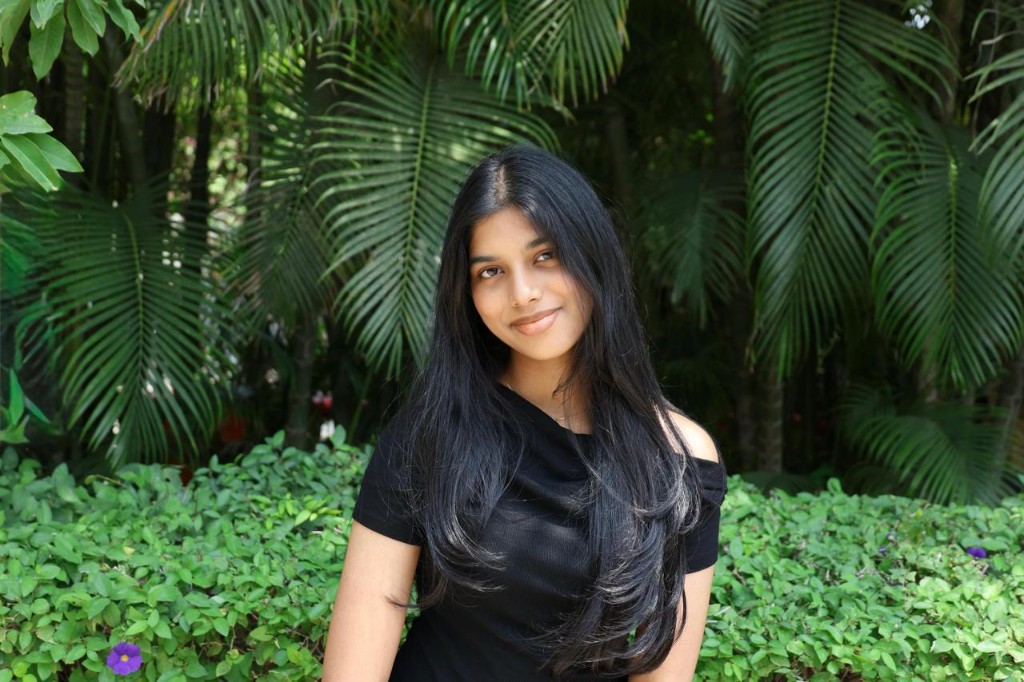
The idea came from 17-year-old Shritha Shetty Puvvadi, a student at Oakridge International School, Gachibowli. Interested in agriculture and the challenges faced by Indian farmers, she wanted to find out whether crops such as kale could grow successfully in Hyderabad despite its hot climate.
With access to the temperature-controlled chamber at her family's Snow Kingdom facility, Shritha had an opportunity to put that question to the test.
Where the Idea Began!
Farming involves more uncertainty than most people realize. A change in weather, a sudden fall in market prices or an increase in the cost of seeds and other inputs can affect a farmer's earnings. For small and marginal farmers, managing these expenses while trying to maintain a steady income can be particularly difficult.
While learning about these challenges, Shritha became interested in crops that could offer farmers another source of income. She began looking into Speciality vegetables that are popular among urban consumers but are not commonly grown in warmer parts of India.
Kale caught her attention. Known for its nutritional value, this leafy vegetable is used in salads and a variety of healthy meals. It generally grows well in cooler conditions, which makes cultivation in a city like Hyderabad more challenging. Much of the specialty produce available in urban markets also travels from other growing regions, contributing to its retail cost.
Shritha wanted to explore whether growing such vegetables locally could be an alternative.
Her research also brought her across the Pradhan Mantri Mudra Yojana, a government initiative that supports small businesses and entrepreneurs. This encouraged her to look at farming beyond food production and consider how alternative crops might create business opportunities for farmers.
A Snow Facility Becomes an Unusual Growing Space
One of the biggest challenges was finding an environment suitable for the experiment.
Hyderabad's summer temperatures regularly cross 40°C. Growing vegetables that prefer cooler conditions in such weather is not easy, particularly when the plants are exposed to the heat outdoors.
Shritha needed a space where the temperature could be controlled. The temperature-controlled chamber at Snow Kingdom Hyderabad offered an opportunity to study how the plants responded to cooler growing conditions.
The facility is primarily known for bringing snow experiences to visitors in a city with a warm climate. For this project, however, it served a different purpose. Its controlled environment gave Shritha a place to carry out her experiment and observe the plants as the temperature was gradually lowered.
It was an interesting change from the facility's usual use. A space associated with recreation became part of a student's effort to understand an agricultural problem.
Three Varieties of Kale Under Observation
Shritha chose three varieties of kale for her experiment: Winterbor, Red Russian and Vates.
Each variety has a distinct appearance. Winterbor is recognized by its curly leaves, Red Russian has reddish-purple stems and distinctive foliage, while Vates is known for its compact growth and curly green leaves.
Rather than focusing on just one variety, Shritha included all three to observe how they would respond to the controlled conditions.
As part of the experiment, she gradually lowered the temperature and monitored the plants' growth. The aim was to see whether the environment could support the development of these vegetables despite Hyderabad's naturally warmer climate.
The results were encouraging. All three varieties grew successfully inside the temperature-controlled chamber.
For Shritha, this was an important outcome. It showed that growing certain cold-climate crops in warmer locations may be possible when suitable environmental conditions are provided.
Of course, successful growth in a controlled space is only one part of the picture. Whether the same approach can be used for commercial cultivation is a separate question that requires further study.
Could This Approach Work for Farmers?
Shritha's experiment brings attention to controlled-environment farming, where factors such as temperature are managed to create suitable growing conditions for selected crops.
This method could offer an alternative for growing vegetables that may otherwise struggle in a region's natural climate. It also raises an interesting possibility for cities like Hyderabad, where demand for specialty vegetables is growing.
If such crops can be cultivated closer to urban markets, transportation distances could potentially be reduced. Local availability may improve, and farmers could have an opportunity to explore products that reach a different segment of consumers.
However, there are practical challenges to consider before adopting this approach on a larger scale. Setting up a temperature-controlled growing space involves investment in infrastructure and equipment. Electricity consumption, water requirements, maintenance, crop yields and market demand would all affect the overall cost of cultivation.
These factors need to be studied carefully to understand whether the method can provide farmers with sustainable returns.
Shritha's experiment is not a claim that controlled-environment farming can immediately solve the problems faced by Indian agriculture. It is an early attempt to explore an idea that may be worth developing through further research.
Beyond Agriculture: Another Side of Shritha's Interests
Shritha's interest in exploring new ideas extends beyond farming. She is also associated with Indian Super Heros, an initiative under the Shri Shakthi Group.
Inspired by her grandmother's stories and traditional Sanskrit slokas, the initiative aims to introduce children to Indian mythology, cultural values and slokas. Storytelling, interactive workshops and digital learning are used to make these subjects accessible and engaging for younger audiences.
Although this venture is different from her agricultural research, both reflect her interest in taking an idea beyond the drawing board and finding ways to put it into practice.
Her work offers an example of how young people can explore different interests and connect what they learn with real-world activities.
More Than a Place to Experience Winter
For most visitors, Snow Kingdom Hyderabad is a destination to enjoy snow and experience a colder climate without leaving the city. Shritha's project gave the facility an opportunity to be part of a very different experience.
The temperature-controlled chamber became a space for observing plant growth and exploring an agricultural question. It also showed how an existing facility can sometimes be put to an unexpected use.
The successful growth of Winterbor, Red Russian and Vates is an encouraging beginning for Shritha. There is still more to understand about the costs and practical requirements of growing such crops commercially, but the experiment has opened the door to further exploration.
At Snow Kingdom, the experience of winter usually ends when visitors leave the snow-covered space. For Shritha's project, however, that controlled environment became the starting point for a new question about farming.
It is a reminder that useful ideas can emerge in unexpected places. Sometimes, all it takes is a different perspective and the curiosity to try something new.